
Kent County's Most Wanted Program
A most wanted program is selective by design. An agency picks a handful of cases. It writes a short profile for each and asks the public to send tips through a set channel. That appeal is not the warrant itself, and it never replaces the court record. Kent County's official Sheriff pages publish no such roster today. The county site offers an inmate lookup and a records division instead of a fugitive gallery, and the city police pages stick to contact information rather than any warrant list. That absence is real, and naming it plainly beats a list scraped from somewhere else. If Kent County launches a program later, the official page will carry it, along with how the tip process works. Names, photos, and profiles belong on that page alone, not copied elsewhere.
Why No Kent County Most Wanted Roster Appears
Why the gap? Michigan has no statewide public warrant database. The law-enforcement network that carries warrant entries is restricted to authorized agencies, and the state's criminal-history product excludes warrant information altogether. A curated fugitive page, then, is something an agency must choose to build and staff. The Kent County Sheriff's pages, the county FOIA pages, and the city police pages publish none today: no roster, no tip line, no reward schedule, no update date. No central list exists to fill the space.
Note: A missing roster means the county has not published one, not that no warrants exist.
How the Most Wanted Lists Work
Where these programs do run, the pattern holds steady. The agency selects cases that fit its criteria. It writes a brief entry and publishes it with a way to send information. Entries come down after an arrest, once a warrant is recalled, or when a profile stops helping. A published profile can go stale within a day, and a name left lingering on a copied page after an arrest harms a real person in Kent County. That risk is exactly why official pages get linked rather than copied. A legitimate program publishes certain standard fields. When a page is missing several of them, read it as an unverified aggregator rather than an official Kent County source.
| Field | Why it must appear |
|---|---|
| Operating agency | Who owns and updates it |
| Official page address | Lets a reader verify it |
| Tip channel | A vetted way to send information |
| Reward terms | Whether and how a reward is paid |
| As-of date | How current the list is |
| Do-not-approach notice | Keeps the public from acting alone |
Any page that copies mugshots, sells a subscription, or names no operating agency is not an official Kent County program.
Kent County Jail Viewer Is Not a Most Wanted List
The nearest public tool in Kent County is the jail's inmate lookup. It shows who is in custody right now. It does not show who is wanted. The Sheriff's own wording is careful here. The lookup warns that the office does not warrant the posted information as current, accurate, or complete, and that it should not be relied on for legal action. So a person missing from the lookup can still have an unserved warrant. Use the Kent County inmate lookup for a custody question. Take a warrant question to the issuing court instead. The two answers are not interchangeable.
Reporting a Tip Safely
A tip helps when it gives an agency something verifiable. That means a location, a vehicle, a time, or a pattern. If Kent County runs an official program, its page carries the tip number and any anonymous option. Without one, the county's general non-emergency channels are the way to pass along a concern.
Tip Safety: Send information only through the channel an official agency publishes. Do not approach a person named on any list, and do not post names or locations on social media.
Rewards belong to the program that offers them. Kent County publishes no reward amount, tip number, or anonymous claim process. Ask the receiving agency instead of trusting a third-party figure. One warning stands regardless. Never send money to anyone claiming to hold a warrant over a listed person. No legitimate court or sheriff's office collects warrant money that way.
Most Wanted Lists vs Active Warrants
A most wanted list is a small public appeal. An active warrant is a court process that may never appear in public view at all. The two overlap in Kent County, but they are not the same product.
| Point | Most wanted list | Active warrant |
|---|---|---|
| Who controls it | The agency that runs the program | The issuing court |
| How many appear | A selected few | Every warrant the court has not cleared |
| How it ends | Entry removed after an arrest or recall | Court entry of recall, service, or cancellation |
| Where to confirm | The official program page | The clerk of the issuing court |
A name absent from any curated Kent County list can still carry an active warrant. The court docket settles that question.
Kent County Warrant Checks When No List Exists
With no county roster to check, the route is the same as any Kent County warrant search. Start with the court that handled the case. Then work through the public tools from there.
- Search MiCOURT for the case and any warrant event.
- Use the court's own lookup, such as the 61st District Court's public case search.
- Call the issuing clerk and ask whether a bench warrant or order to show cause is active.
- Check the inmate lookup only for a current-custody question.
- Contact Friend of the Court at 616-632-6888 if the matter is child support or family contempt.
Federal Warrants and the Grand Rapids Marshals Office
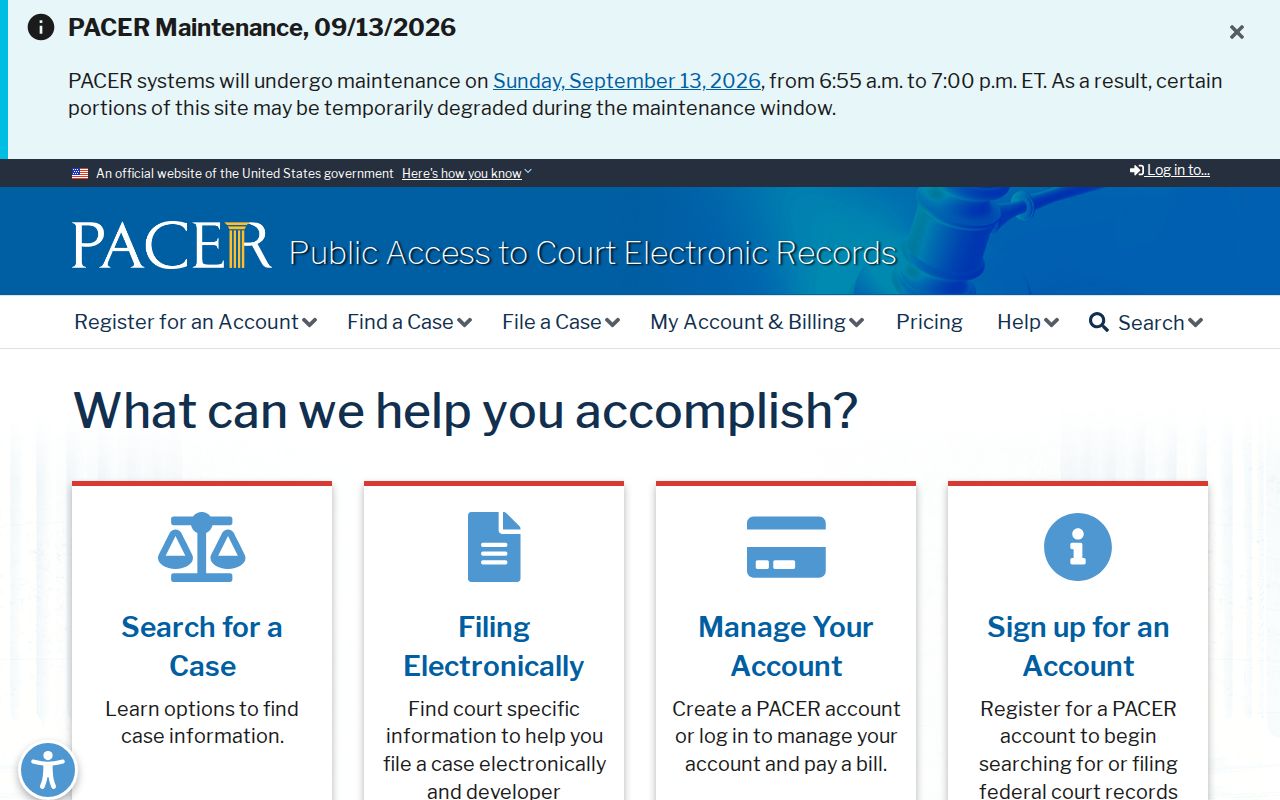
Federal fugitive matters run through a different system. The U.S. Marshals Service district office for the Western District of Michigan sits at 110 Michigan Street NW, Suite 744, in Grand Rapids, and answers at 616-456-2438. A federal warrant issues from a federal judge or magistrate, never a county court. For docket access, PACER charges a per-page fee and waives it below a quarterly threshold. A federal warrant may also be sealed, so an absent entry proves nothing.

The Grand Rapids contact printed here belongs to a federal enforcement office. It is not a Kent County records counter. A local warrant question stays with the Michigan court that issued it.
If You Think You Are on a List
Verify any listing before you assume it is current. A copied Kent County roster can sit online for years. Ask the agency that published it how entries come down, then confirm the warrant with the issuing court.
Do Not Approach Anyone: If a profile may name you, contact a lawyer and the agency that published it. Do not visit the agency counter or the listed address without instruction.
Once the warrant is recalled, the Kent County program entry should drop off too. Keep your recall order handy and follow up if the profile lingers, since the two updates rarely land together.
Kent County Sheriff FOIA Instead of a Public Roster
With no public warrant roster, a records request is the formal way to get a document Kent County holds. The Sheriff's Records Division at 701 Ball Avenue NE accepts requests by mail, fax, email, hand delivery, and an online portal. The county answers within five business days and can extend that by ten business days, with exempt material redacted. Fees track actual cost under the Michigan Freedom of Information Act. Name the case, the report number, and the document you want. Ask for a record, not a list of names.
The county FOIA page above posts current submission methods and fee rules. A records response shows what Kent County holds. It builds no fugitive list, and it clears no warrant.
Why Kent County Most Wanted Lists Omit Warrants
Even a fully active program would not publish every Kent County warrant. Sealed cases, juvenile files, investigative material, and warrants already served stay out of public view. That limit applies to any most wanted page, official or not. A blank where a name should be proves nothing. For a specific case, the issuing court holds the only reliable answer; for a program, ask the agency that runs it.
Note: Treat any warrant list as a starting point for verification, not a final answer.